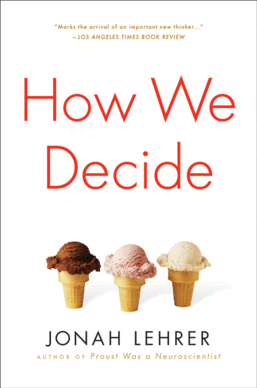
Jonah Lehrer’s book “How We Decide” takes readers inside the brain’s decision-making machinery, revealing when we should trust our gut and when we need careful analysis.
The Two Systems of Thinking
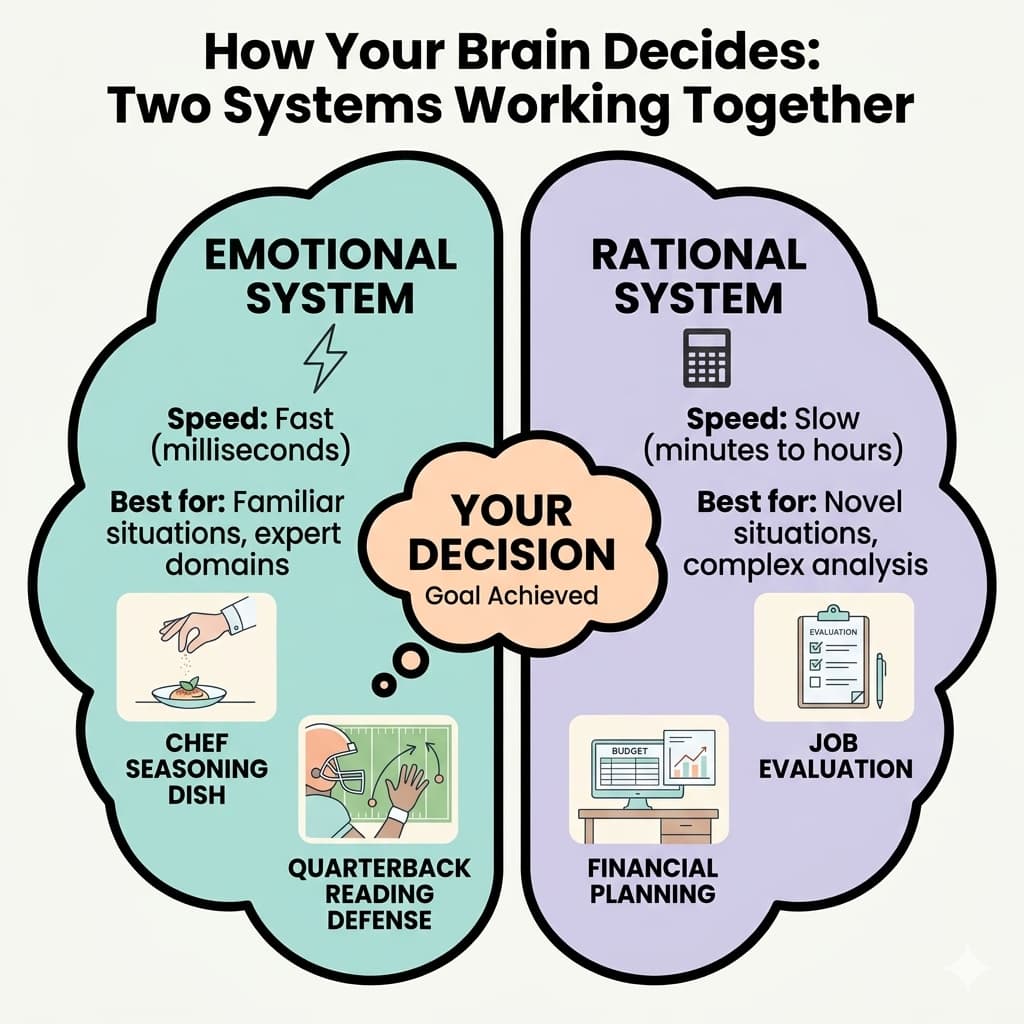
Lehrer explains that our brains use two distinct systems for making choices:
The emotional system operates quickly, drawing on experience and pattern recognition. It’s excellent for familiar situations where you’ve built up expertise, like a quarterback reading defensive formations or a chef adjusting seasoning.
The rational system works slowly and deliberately, analyzing options logically. It excels in unfamiliar situations requiring careful calculation, like financial planning or evaluating job offers.
How Your Brain Makes Decisions: The Science Behind the Choice
Lehrer draws on neuroscience research to show that decision-making isn’t just happening in one part of your brain. The prefrontal cortex handles rational analysis, while the emotional centers—particularly the dopamine neurons—track patterns and predict outcomes based on past experiences.
This dual-system architecture evolved for good reason. Our ancestors needed quick, intuitive responses to immediate threats (emotional system) and the ability to plan for future challenges (rational system). Modern life requires both, often simultaneously.
When Emotions Beat Logic
Surprisingly, Lehrer demonstrates that emotional decisions often outperform purely rational ones in specific contexts. Expert pilots, experienced doctors, and seasoned investors frequently make better snap judgments than they would after lengthy deliberation, because their emotions encode years of pattern recognition.
Most of us aren’t experts in most areas of our lives. We face countless small decisions daily where neither deep expertise nor serious analysis applies.
The Danger of Overthinking Simple Choices
One of Lehrer’s most compelling examples involves shoppers choosing jam. When offered 24 varieties, buyers became paralyzed and purchased less. When offered just 6 varieties, sales increased dramatically. The rational mind, when overloaded with options, actually performs worse than simple intuition.
This phenomenon, called “analysis paralysis,” explains why we sometimes make better decisions when we stop overthinking. Your emotional brain has already processed more variables than your conscious mind can track.
Real-World Examples from Lehrer’s Research
The book examines decision-making across fascinating contexts:
Professional poker players who can’t explain their moves logically but consistently win because their emotional systems recognize patterns in opponents’ behavior.
Fire commanders who evacuate buildings seconds before collapse, later unable to articulate why they sensed danger—their experience spoke through emotion, not logic.
Airline pilots in crisis situations who ignore their rational impulses (which would crash the plane) and trust their trained instincts instead.
Modern Tools for Daily Minor Decisions
For routine, low-stakes choices that don’t warrant extensive analysis, tools like the Decision Maker provide a practical middle ground. By externalizing minor decisions, you preserve mental energy for choices that genuinely matter while still engaging your intuition and self-reflection.
Matching Decision Methods to Decision Types
Lehrer’s framework suggests three categories of choices:
Expert-domain decisions: If you have genuine expertise, trust your gut. Your emotions contain compressed wisdom from thousands of similar situations.
Novel complex decisions: Use rational analysis, gather data, create frameworks. Your intuition has no pattern library here.
Trivial routine decisions: Stop wasting cognitive resources. Use quick rules, habits, or simple external tools (like a decision maker) to decide and move forward.
Common Decision-Making Mistakes to Avoid
Based on Lehrer’s research, these traps sabotage good decision-making:
Trusting gut feelings in unfamiliar territory: Your intuition only works where you have real experience. Don’t trust your “instinct” about stock picks if you’re not a professional investor.
Over-analyzing decisions with too many variables: Your rational mind can only hold 7±2 pieces of information. Beyond that, you’re fooling yourself that more analysis helps.
Ignoring emotional signals in familiar contexts: If something “feels wrong” in your area of expertise, that feeling deserves serious attention—it’s pattern recognition, not random anxiety.
Making important decisions while stressed or hungry: Your brain’s systems work differently under physical strain. Delay major choices until you’re in a better state.
The Balance Between Systems
Lehrer’s key insight: knowing which system to engage matters more than having one perfect decision-making method. Important, unfamiliar decisions need rational analysis. Quick, familiar choices benefit from trained intuition. And trivial decisions? Sometimes the wisest choice is not overthinking them at all.
Practical Applications for Everyday Life
How does this translate to your daily decision-making?
Morning routines: Don’t waste mental energy deciding what to wear or eat for breakfast. Create defaults and stick to them, preserving brain power for important choices later.
Work decisions: If you’re experienced in your field, trust your initial instincts on familiar problems. Save deep analysis for unfamiliar challenges or high-stakes situations.
Personal life: Stop agonizing over restaurant choices, weekend plans, or minor purchases. These decisions don’t deserve the mental real estate you’re giving them.
Understanding your brain’s decision architecture helps you allocate mental resources where they’ll make the biggest difference.